Introduction
If someone had asked me at eight years old which skill would become one of the most important in my life, I probably would never have answered: speaking English.
At the time, the language was just another school subject. I enjoyed the classes, had always found learning relatively easy, and usually earned good grades, but I did not imagine that this first contact would open doors that completely changed my future.
Over the years, I kept studying. I attended different language schools, met teachers who deepened my curiosity, and discovered that learning English went far beyond memorizing word lists or grammar rules.
Today, as a Civil Engineering student, English teacher, and someone passionate about learning, I can look back and see that mastering a second language transformed far more than my ability to communicate. It changed how I study, teach, travel, meet people, and recognize opportunities.
From personal experience to classroom practice
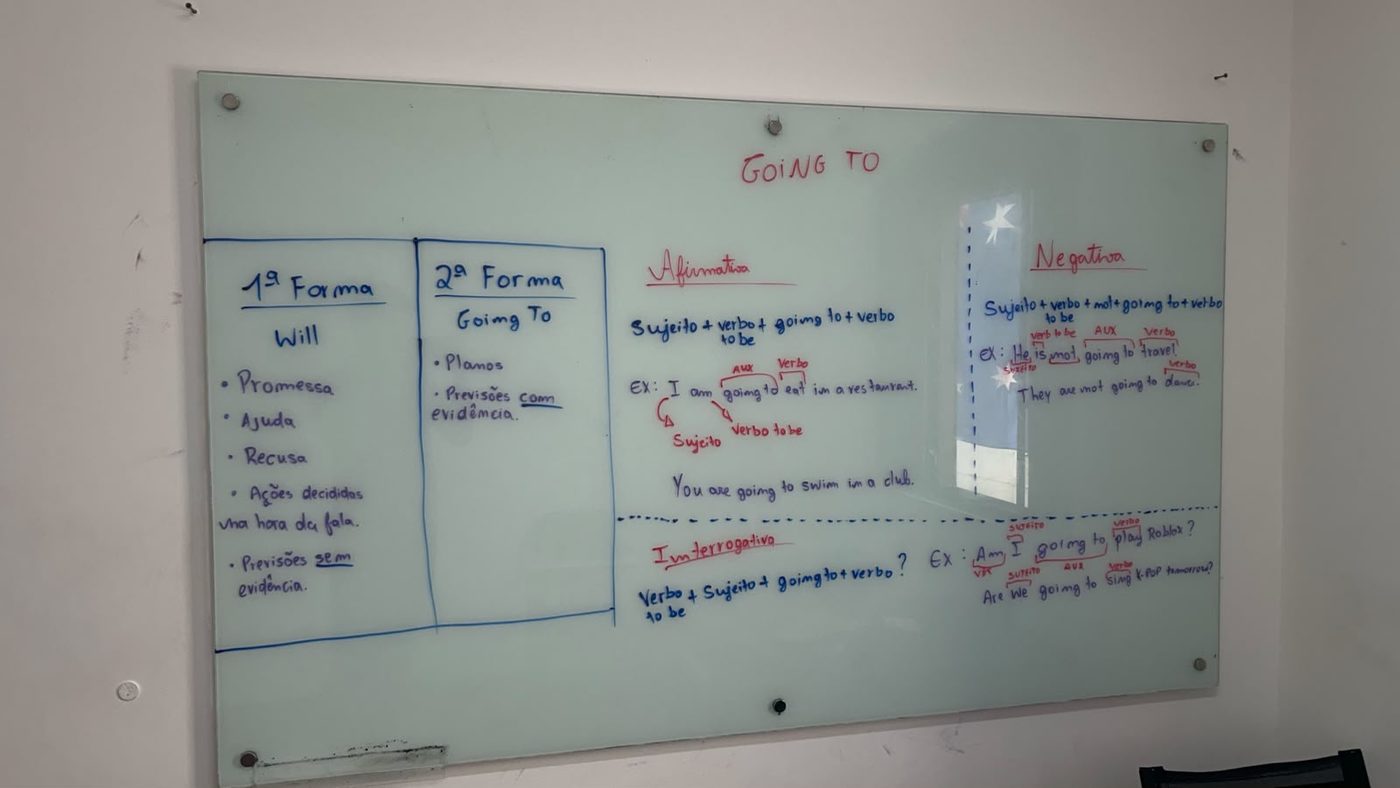
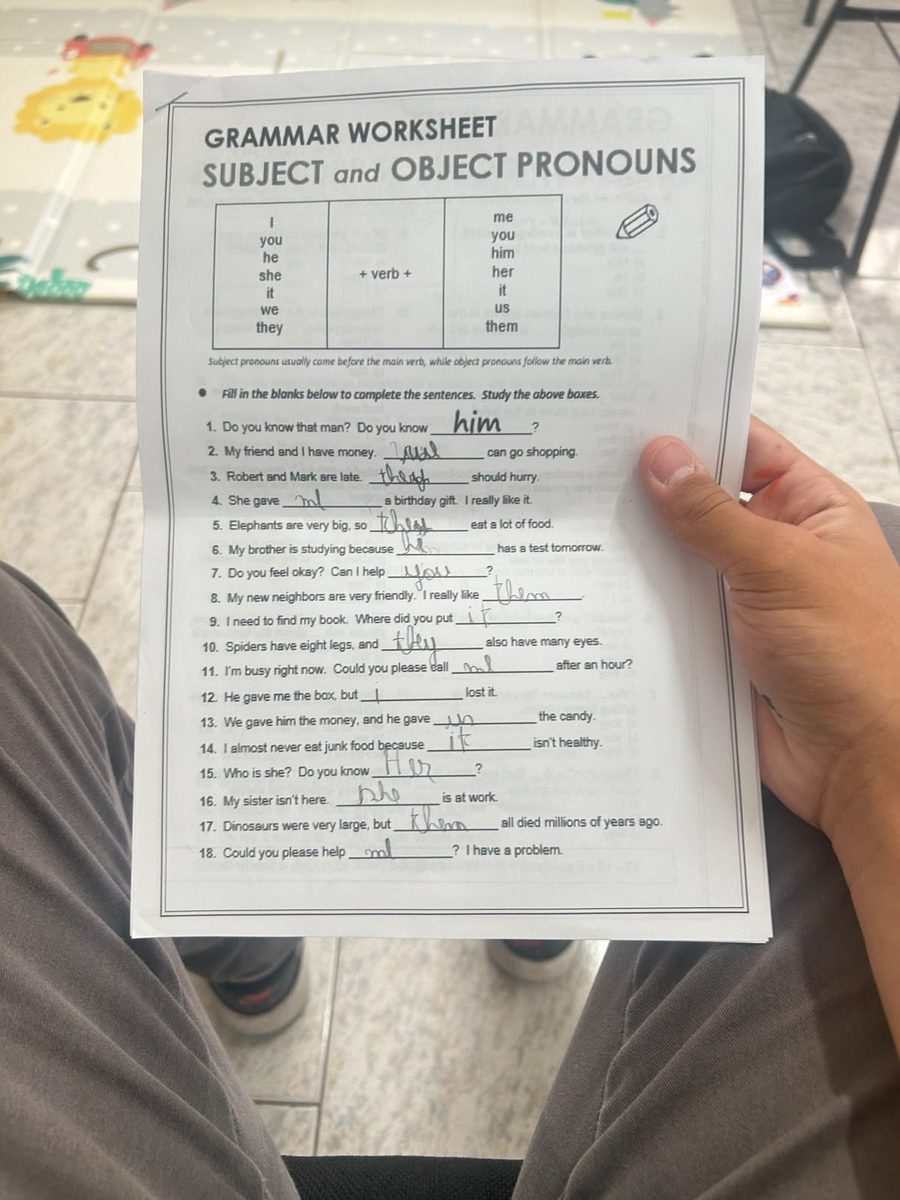
An important part of my relationship with English is that it stopped being only something I studied and also became something I teach. Preparing lessons, correcting exercises, explaining grammatical structures, and creating more dynamic activities helped me see the language in a much more concrete way.
The images below show parts of that routine: whiteboards with explanations, review sheets, pronunciation and vocabulary activities, and materials used to make learning more visual and participatory. They illustrate a central point of this article: learning a second language becomes more effective when it appears in practice, daily contact, and interaction with others.
EF SET English Certificate
In June 2026, I completed the EF SET Certificate with an overall score of 61/100, equivalent to C1 Advanced on the CEFR. The result reinforces my English journey and complements my practical experience as a student and teacher.
- Speaking: B2 Upper Intermediate
- Listening: B2 Upper Intermediate
- Reading: C1 Advanced



1. Greater confidence in communication
For a long time, speaking English seemed like the greatest challenge. Understanding texts was relatively easy, but talking to other people required courage. Like many students, I was afraid of mispronouncing something or forgetting a word.
Over time, I realized that confidence does not come before practice. It develops precisely when we allow ourselves to practice.
This became very clear when I traveled abroad. I remember reaching immigration and thinking, “Will I be able to hold a conversation?” As soon as it began, all the nervousness disappeared. I answered the questions calmly and realized that years of study had truly been worthwhile.
After that experience, I began to approach English differently. The confidence I gained in the language also influenced how I communicate in Portuguese, my academic presentations, and even the classes I now teach.
2. New professional opportunities
One of the greatest benefits of learning English was seeing how it expanded my professional possibilities. After many years of study, I received an invitation that changed my path: becoming a teaching assistant at the school where I studied.
I remember the presentation I gave during the selection process. I did my best and, shortly afterward, was invited to join the team. It represented much more than a new job. It was confirmation that all the effort was being recognized.
Working as a teaching assistant allowed me to keep learning while helping other students. Later, I had the opportunity to work as an English teacher. I never imagined that the boy who started studying at eight years old would one day teach others.
In addition to the professional experience, the language opened new perspectives, strengthened my résumé, and directly influenced my academic and professional choices.
3. Improved academic performance
Another impact that does not always receive enough attention is the academic one. I am currently studying Civil Engineering and can see how English makes knowledge more accessible.
Many scientific papers, research studies, and technical materials are first published in English. Being able to consult these sources without relying exclusively on translations greatly expands the possibilities for study.
Interestingly, teaching English also improved my Portuguese. When I began explaining grammar to my students, I had to understand concepts in Portuguese that I had previously used only intuitively.
This process strengthened my ability to teach, write, and organize my ideas. Learning a second language ended up improving other skills I had not expected to develop.
4. Access to more content and knowledge
If there is one benefit I consider especially important, it is access to knowledge. Today I watch films in English without needing Portuguese subtitles. I also follow videos, read international articles, and engage with content produced by people around the world.
This constant contact with the language naturally accelerated my learning. Looking back, I realize that one of the mistakes that most delayed my progress was limiting English to the classroom.
Learning English does not mean studying English all the time. Often, it means doing what you already enjoy, only in another language.
When I started including the language in my daily life by watching videos, listening to music, playing games, and following content that genuinely interested me, my progress became much faster, lighter, and more enjoyable.
5. Contact with different cultures and ways of thinking
When I began studying English, I thought I was simply learning a new language. Over time, I realized that I was actually encountering new cultures, different ways of thinking, and distinct perspectives on the world.
This became even clearer during my trips abroad. On many occasions, I needed English to talk with people of different nationalities. Although each country had its own culture and, in some cases, very different accents, English served as a bridge between us.
One memorable moment happened during a visit to the Statue of Liberty. I was with my family when a guide noticed that I could communicate comfortably in English and began speaking directly with me.
There were challenging situations as well. On one occasion, I had to ask for directions on the subway from someone whose accent was very different from what I was used to. Instead of seeing it as a failure, I understood that speaking a language also means learning to navigate different forms of communication.
6. Development of memory, reasoning, and creativity
Over the years, I noticed that studying English also transformed how I learn. I have always enjoyed finding connections between words, identifying grammatical patterns, and understanding how ideas are constructed in another language.
Interestingly, teaching English also required me to organize my thinking more clearly. Explaining a topic often demands much deeper understanding than simply using it. By preparing lessons, answering questions, and adapting explanations for different students, I developed skills I now use in nearly every area of my life.
I also began to view problems from different perspectives. The need to interpret contexts, understand expressions, and adapt explanations naturally stimulated my creativity.
7. A transformed relationship with teaching and learning
This may be the most important benefit of all. Learning English completely changed the way I learn any subject.
When I started, I believed the secret was memorizing grammar rules and vocabulary lists. Over time, I discovered that learning happens mainly when the language becomes part of our routine.
I began watching videos in English, listening carefully to song lyrics, playing games in the language, and following content that truly interested me. I realized that learning did not have to be an isolated activity. I could study while doing things I already enjoyed.
This discovery also transformed how I teach. Today I try to show my students that English should not be confined to class time. The more contact they have with the language, the greater their opportunities to progress.
Do you need to be fluent to experience these benefits?
One of the questions I hear most often is whether studying English is worthwhile before reaching fluency. My answer is always the same: yes.
Many people imagine the benefits only appear once they can speak perfectly. In practice, that is not what happens. I noticed important changes before I considered myself fluent.
Fluency does not happen overnight. It is the result of hundreds of small experiences accumulated over time. That is why I believe consistent practice is the key.
Speak with the vocabulary you have today. Tomorrow, you will speak a little better.
How to begin transforming your life through a second language
There is no magic formula for learning a language, but a few habits make a significant difference over time.
- Engage with the language every day. Even if it is only fifteen or twenty minutes, consistency usually produces better results than studying for many hours only occasionally.
- Study subjects that genuinely interest you. If you enjoy technology, sports, music, or travel, look for English content related to those topics.
- Listen to music and watch videos attentively. Notice words, expressions, and structures that appear frequently.
- Practice conversation from the beginning. You do not need to wait until you are fluent to start speaking.
- Record your progress. Writing down new words, recording short audio clips, or revisiting older material helps you see how far you have come.
- Seek guidance when needed. A teacher or experienced person who can correct mistakes and guide your studies can greatly accelerate your progress.
Conclusion
Looking back, I realize that learning English was one of the decisions that most influenced my path. The language has been present in my education, profession, studies, travels, and even the way I connect with other people.
More than learning new vocabulary, I discovered a new way to learn, teach, and see the world. I continue studying today because I believe learning never ends.
If there is one message I would like to leave with anyone reading this article, it is this: you do not need to wait for the perfect moment to begin. Every word learned, every conversation, every video watched, and every mistake made helps build something much greater.
You may not yet be able to imagine where a second language can take you. I could not imagine it either when I started at eight years old. But from my own experience, I can say that it opened doors I did not even know existed.
Frequently asked questions
What are the main benefits of learning a second language?
The main benefits include greater confidence in communication, better professional opportunities, access to more knowledge, cognitive development, and greater contact with different cultures.
Do I need to be fluent to experience these benefits?
No. Many benefits appear during the learning process as you increase your contact with the language and gain confidence using it.
Does English really make a difference in the job market?
Yes. In many fields, English expands professional opportunities, facilitates access to technical content, and can offer a competitive advantage.
What is the best way to learn English?
There is no single ideal method. The most important thing is frequent contact with the language through lessons, conversation, reading, music, videos, and content that fits your routine.
Is it possible to learn English as an adult?
Yes. Age does not prevent learning. Consistency, practice, and a willingness to use the language in daily life usually make the greatest difference.
Did you enjoy the topic? Reach out through LinkedIn, GitHub, or WhatsApp in the portfolio's contact section and tell me which benefit of learning a second language matters most to you.